
SunSirs: Implementation of Zero Tariffs on African Imports Boosts Bargaining Power for Natural Rubber
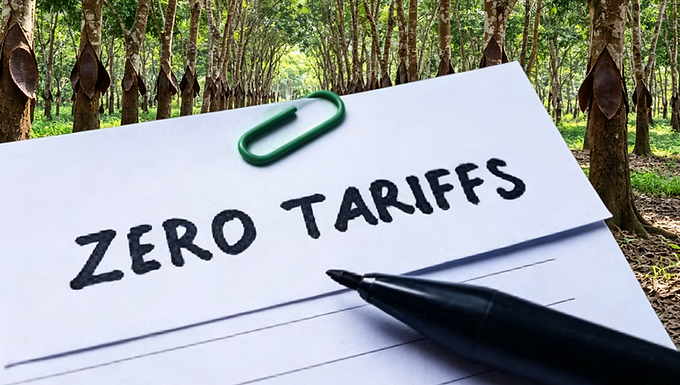
From 1 May, China will fully implement zero tariffs on imports from 53 African countries with which it has diplomatic relations. This is likely to stimulate an influx of low-cost rubber into the domestic market, becoming a key factor influencing market supply and demand. In particular, Côte d’Ivoire is Africa’s largest producer of natural rubber. With an estimated output of approximately 1.8 million tons in 2024—ranking third globally—China’s zero-tariff policy presents new opportunities for Côte d’Ivoire’s rubber industry and will have a profound impact on the supply, pricing and competitive landscape of the domestic natural rubber industry chain.
I. Comparison of Customs Import and Export Data (January–March 2026)
According to customs data, domestic natural rubber imports have remained at a high level, with a continuously diversifying source structure:
Cumulative imports from January to March 2026 totaled 1.7227 million tons, representing a year-on-year increase of 2.19%;
Cumulative imports for the same period in 2025 totaled 1.6858 million tons, representing a year-on-year increase of 19.68%;
Imports for March alone stood at 616,200 tons, up 33.5% month-on-month and 4.0% year-on-year, with a marked concentration of arrivals following the holiday period.
The increase in first-quarter imports was primarily driven by Côte d’Ivoire, Laos and Thailand, whilst the proportion of African rubber has been steadily rising; the zero-tariff policy is set to further reinforce this trend.
II. Production Capacity and Supply Landscape Since April
Domestically, the Yunnan and Hainan production areas have been affected by persistent high temperatures and drought, resulting in a slower tapping schedule. Tapping has been temporarily suspended in some regions, leading to insufficient latex output and a temporary contraction in domestic supply. Overseas, Thailand, Indonesia and Vietnam are gradually entering the tapping season, but the pace of raw material output remains moderate; African production areas such as Côte d’Ivoire are in their peak production season, with supply steadily increasing.
The overall industry picture in April was characterised by ample overseas supply, tight domestic supply, and a diversified import source structure. Following the implementation of the zero-tariff policy, African rubber, leveraging its cost advantage, is expected to see an acceleration in imports during the second quarter, effectively supplementing domestic spot supplies and alleviating regional supply imbalances.
III. Price Trends and Volatility
Natural rubber prices in April fluctuated but remained generally firm:
Full-milk rubber (SCRWF): 17,200 RMB/ton on 29 April, up 3.52% from 16,566 RMB/ton at the start of the month;
No. 20 standard rubber: followed a similar upward trend during the same period, with the spot price centre shifting higher;
Volatility characteristics: Prices rose in the first ten days of the month, buoyed by drought-induced harvesting suspensions; they consolidated during the middle of the month; and stabilized in the latter part of the month, supported by costs. Overall, the market exhibited high-level volatility with relatively strong resilience.
IV. Logic Behind Price Movements in Upstream and Downstream Sectors
Upstream raw materials: Droughts in domestic and international production areas have led to higher latex prices, providing cost support; African raw materials hold a clear price advantage, and the removal of tariffs has further reduced overall import costs.
Natural Rubber: Domestic supply constraints combined with diverging import costs mean that high-price regions face pressure from increased imports, whilst low-price regions are underpinned by raw material costs; price fluctuations have narrowed, with prices trading within a range.
Downstream Tires and Rubber Products: While essential demand remains stable, acceptance of high prices is limited; procurement is primarily on an as-needed basis, making it difficult to drive sustained increases in raw material prices; price transmission exhibits a pattern of strength upstream and weakness downstream.
V. Impact of Zero Tariffs on the Domestic Market
In the short term: As imports of African rubber gradually increase, the impact of low-cost supplies will be limited; domestic prices will continue to be driven by weather conditions in production areas and the progress of the tapping season, maintaining a fluctuating but generally firm trend.
In the medium term: The proportion of African rubber imports will rise, making low-priced resources the norm; the high-price range in the domestic market will be compressed, increasing pressure for the overall market to shift downwards, and the industry will enter a phase of cost rebalancing.
Supply Landscape: The market will shift from being dominated by Thailand, Indonesia and Malaysia to a dual-pillar structure comprising Southeast Asia and Africa. With a more dispersed supply base and greater competition, domestic buyers’ bargaining power will increase.
Price Volatility: Price fluctuations will narrow, with a reduced likelihood of sharp rises or falls. The market will primarily experience range-bound movements and cyclical fluctuations.
VI. Summary
The implementation of the zero-tariff policy for African rubber marks the entry of China’s natural rubber imports into a new phase characterized by globalization, low costs and multiple sources. African producing regions such as Côte d’Ivoire will become significant sources of incremental supply, effectively alleviating domestic supply pressures and stabilizing price fluctuations. In the short term, domestic market conditions will remain influenced by weather and the tapping schedule; in the medium term, under the impact of low-cost African rubber sources, upward price potential will be limited, and the supply-demand balance will tend towards a more relaxed state.
In the future, the natural rubber market will revolve around three core factors: the pace of imports from African sources, weather conditions in production regions, and downstream production capacity utilization. Prices will shift from a one-way upward trend to wide-range fluctuations and cost-based pricing, with profits along the supply chain shifting towards downstream sectors, leading the industry into a more stable and healthy phase of development.